


“Why Won’t My Child Listen?”
The surprising developmental reasons why kids won’t listen to parents
By Tess Shirefley, Developmental Psychologist and Child Development Professor
TL;DR
Wondering why kids won’t listen? The reasons have little to do with obedience or discipline. Listening depends on developing skills — attention, memory, impulse control, language — plus temperament, the fit between a child’s temperament and a parent’s, and normal (if bumpy) developmental growth. Most “not listening” is development in progress, not a behavior problem.
Why won’t my child listen? Because listening isn’t just one skill.
Listening isn’t a single skill, it’s the coordination of at least six developing skills that kids gain over time on their way to becoming autonomous adults:
These skills include things like:
- Attention
- Memory
- Impulse control
- Emotional regulation
- Language comprehension
- Motivation
This distinction matters because many of the reasons children struggle to listen aren’t signs that something has gone wrong, they’re signs that important developmental processes are unfolding exactly as they should.
As parents, we often interpret listening as a matter of compliance: Did my child do what I asked them to do? But developmental scientists see it differently. And while that reframe may not make it any less frustrating when our kids ignore us for the fifteenth time, it can help us appreciate the growth taking place. Now let’s jump to our next reason children don’t listen.
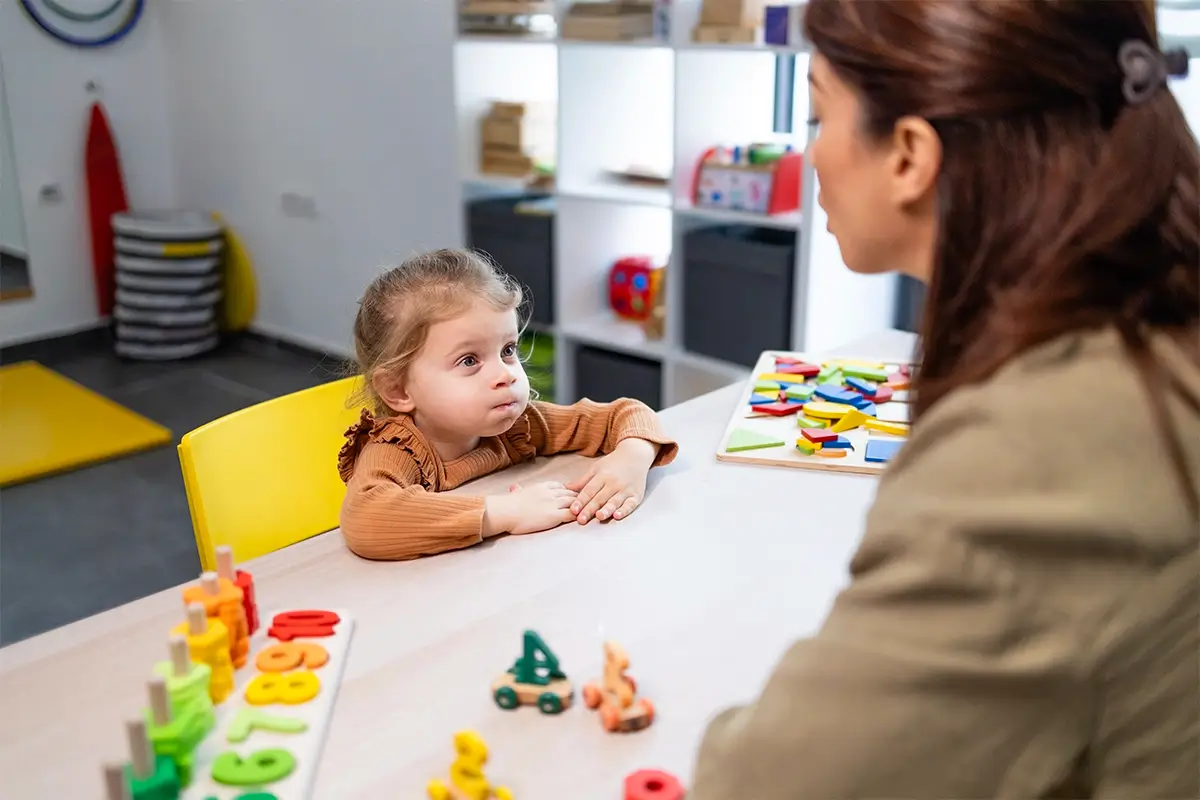
Why won’t my child listen? Because your child’s temperament matters.
From a developmental perspective, listening is not simply a matter of whether a child is “good” or “bad” at following directions. Children’s temperaments influence how they manage emotions, respond to limits, react to new situations, and regulate impulses. These skills also happen to be key factors that affect compliance.
Each kid is their own unique concoction of genetics, getting all the “good” and “challenging” traits from family lineage. Some children have temperaments that are more measured, slow, and steady while others appear more impulsive, reactive, and curious.
These tendencies can either be strengthened or exacerbated by environmental cues. For example, a more shy child might get easily overwhelmed in a crowd, while a reactive child might get excited. The combination of genes and environment can result in a perfect storm that leads to children either perfectly complying or not complying at all.

Why won’t my child listen? Because your temperament matters, too.
Of course, children aren’t the only ones who bring their temperament into these interactions. Parents have their own temperaments, too, which shape how we respond when our children don’t listen.
Developmental scientists refer to the interaction between a child’s temperament and a parent’s temperament as goodness of fit. Some parent-child pairings naturally complement one another, while others require more intentional effort. For example, a highly reactive child may benefit from a calm, slow-to-anger parent. In other cases, parent and child may have similar temperaments that amplify one another, turning small conflicts into bigger ones.
In my own family, my son and I are both highly reactive, which means we sometimes escalate together and spiral into what we jokingly call a “hole of doom.” My husband, on the other hand, is naturally calmer and is often able to help both of us regulate.
While we can’t (and don’t need to) change our temperaments, we can become more aware of how they interact. Understanding both your child’s temperament and your own can help you approach listening challenges with greater intention and a little more grace for everyone involved.

Why won’t my child listen? Because development isn’t linear.
Why did the child who listened last week suddenly stop listening this week? I’ve asked myself this question more times than I can count. Sometimes the biggest reason children stop listening is surprisingly simple: they’re growing.
One of the most fascinating findings from developmental science is that growth isn’t always smooth. Children often develop in bursts, and during periods of rapid change their behavior can temporarily become less organized before becoming more organized again.
As children gain new language, thinking, social, and motor skills, they’re constantly reorganizing what they know and how they interact with the world. During early childhood, this process often happens through periods of disequilibrium, a fancy way to say that development looks a little messy before it settles into a new normal. As I jokingly tell my child development students, disequilibrium is one reason young children occasionally seem to lose their minds.
During periods of disequilibrium, children may suddenly become more irritable, struggle to regulate their emotions, or even appear to lose skills they had already mastered, like toilet training or falling asleep independently. These periods often occur just before acquiring new skills, but for parents, it can feel like we’ve been handed an entirely different child. In our house, we (lovingly?) call these our son’s “Tiny Tyrant” days.
While these developmental shifts are a normal part of growing up, they can leave parents feeling frustrated and confused. In many ways, we’re parenting a moving target. The child who listened last week may genuinely be in a different place this week, which means the strategies that worked before won’t always work now. Sometimes children need clear limits and consequences; other times they need more support, explanation, or patience while they work through a period of rapid growth.

Why won’t my child listen? Because your child is becoming their own person.
One of the most overlooked reasons children don’t listen is that they’re becoming more independent. Parents often experience this as arguing, negotiating, refusing, or insisting on doing everything “all by myself.” Developmental scientists see it differently: these behaviors are signs that children are developing autonomy, one of the central tasks of childhood.
As children grow, their thinking, language, and memory improve, but they also develop theory of mind which is the understanding that they are separate people with their own thoughts, goals, and preferences. It’s no wonder young children sometimes seem like “little lawyers.” They’re becoming increasingly capable of remembering past experiences, forming opinions, and using that information to make a case for what they want. The development of these skills is critical, but at times can be really frustrating as a parent.
A great example of this was an interaction my son and I had over a now infamous gummy bear. My son kept yelling at me that he wanted a gummy bear to which I calmly said “We can’t have one right now”. He kept saying “you aren’t listening to my words! You aren’t listening to my words!”, mirroring exactly what I say when he isn’t following my instructions (or perhaps, demands).
In that moment, we both realized something important: listening and doing what someone wants aren’t always the same thing. My son was also discovering that people can choose not to do what someone else asks. As frustrating as that realization was for me, it’s also exactly what I hope he’ll learn. My job isn’t to raise a child who always obeys me, his teachers, or his peers; it’s to raise one who can think for himself and one day comply because he wants to rather than is told to.
This interaction captures one of the central tensions of parenting. The very qualities we hope our children develop as adults often first appear as resistance. Sometimes what feels like “not listening” is actually evidence that children are becoming active participants in their own lives instead of passive followers of ours. That’s frustrating in the moment, but it’s also one of the clearest signs that they’re growing exactly as they should.

What Now? Ways to Respond When Your Child Won’t Listen
Taken together, these developmental processes paint a different picture of listening than most parents expect. Even with years of training in child development, it doesn’t always make it easier when I need my children to do something and they simply won’t. But developmental science does help me make sense of those moments. Remembering that much of my children’s resistance, impulsivity, and noncompliance reflects normal development helps me respond with more empathy and see these challenges as temporary rather than lasting behavioral concerns.
Understanding why children struggle to listen doesn’t magically make parenting easier, but it can change how we respond. Instead of asking, “How do I make my child listen?” we can ask, “Given where my child is developmentally, what’s the most helpful response right now?” With that perspective in mind, here are a few ideas to try.
Tip 1: Reflect on your child’s temperament and your own.
Rather than asking why your child isn’t listening, ask what might be making listening especially difficult in that moment. Some children become overwhelmed easily, while others become more impulsive or emotionally reactive.
Your own temperament matters too. Reflect on how the two of you interact. In my family, my son and I are both highly reactive, so when we’re both stressed, we tend to escalate each other. Knowing this helps me keep requests simple, slow the interaction down, and avoid turning small moments into power struggles.
Tip 2: Stay consistent in your expectations but flexible in your approach.
Children need consistency, but they don’t always need the exact same strategy. Development is constantly changing, which means what worked last week may not work today. Try to keep your expectations and values steady while adjusting how you respond based on what your child needs in the moment.
During my son’s “Tiny Tyrant” days, for example, we’ve found that big consequences often make things worse. We still expect him to clean up, walk safely, and follow bedtime routines, but we focus more on support, coaching, and calm repetition than escalating consequences.
Tip 3: Decide when listening is non-negotiable and when it isn’t.
Not every moment requires immediate compliance. As children develop independence, some moments become opportunities to practice problem-solving, negotiation, and making choices. Safety, respect, and health are clear non-negotiables. But when the stakes are lower, consider offering choices or allowing flexibility in how your child meets the expectation. Sometimes giving children appropriate autonomy actually reduces conflict while still accomplishing the goal.
Tip 4: Consider using support tools.
Families looking for additional support may also benefit from tools like Calling All Kids, which uses scripted pretend phone calls with familiar characters (e.g., Cinderella, Spiderman) to help children think through common behavioral challenges. (I advise the Calling All Kids team about children’s development, so I’m not a neutral bystander here but I recommend it because I’ve seen the impact it can have firsthand.)
For some children, hearing a message from another trusted voice can reinforce conversations parents are already having at home and provide a new way to talk about listening. The app also includes a parent dashboard that offers insights into a child’s temperament and suggestions for supporting positive parent-child interactions.

Frequently Asked Questions
Is it normal for 3 year-olds to not listen?
Yes. Selective listening and outright refusal are common as toddlers develop impulse control, language comprehension, and independence — all skills that take years, not months, to mature.
Why does my child listen some days and not others?
Development isn’t linear. Children often move through periods of disequilibrium — brief stretches of rapid growth where behavior temporarily becomes less organized — before settling into a new, more capable normal.
Is my child’s temperament the reason they don’t listen?
Partly. Temperament shapes how a child manages emotions, reacts to limits, and regulates impulses, all of which affect compliance. But the fit between a child’s temperament and a parent’s — not the child’s temperament alone — often matters more.
Is arguing back a sign of a discipline problem?
Not necessarily. As children develop theory of mind — the understanding that they’re separate people with their own thoughts and preferences — negotiating and refusing are often signs of healthy, age-appropriate autonomy rather than defiance.
When should I be concerned about my child not listening?
Occasional non-compliance is developmentally typical. Consistent difficulty across settings (home, school, with multiple caregivers), especially alongside other concerns like speech delays or trouble with peer relationships, is worth discussing with a pediatrician.